

The sustainability It has become an essential necessity for companies that want to remain relevant and responsible in today's environment. 🌍 The ESG reporting (Environmental, Social, and Governance) is crucial to demonstrating this commitment, and with new regulations such as the CSRD Directive (Corporate Sustainability Reporting Directive) and the NFRD (Non-Financial Reporting Directive), has become a legal obligation.
Index
What is ESG Reporting? 📝
The ESG reporting It involves collecting, analyzing, and sharing information about how your company manages its environmental, social, and governance impact. These reports allow investors, customers, and other stakeholders to assess your company's commitment to a sustainable future. 🌿 The ESG reporting It's like a compass that guides your company towards a balance between financial success and social responsibility.
From NFRD to CSRD: What Changes? 🔄
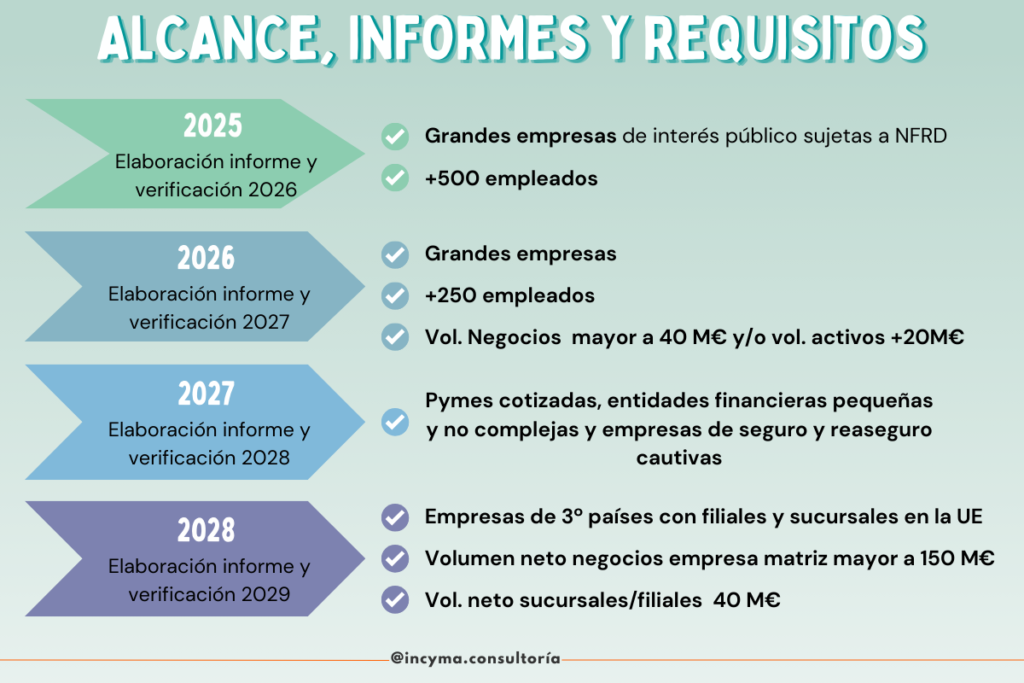
The NFRD Directive, The regulation, in effect since 2014, was an important first step in getting companies to start reporting on non-financial matters. However, the new CSRD Directive, The stricter law significantly expands the number of companies required to report, including small and medium-sized publicly traded companies and large corporations. If your company has more than 250 employees, a annual turnover exceeding 40 million euros o a balance sheet greater than 20 million euros, You will likely need to comply with these regulations. 📈
Key Requirements for CSRD and NFRD Compliance ⚖️
Comply with the CSRD It's essential, not only to avoid penalties, but also to stand out in a market increasingly focused on sustainability. Here are the main requirements:
- Expanding Scope and Transparency: The CSRD expands the number of companies required to report and demands greater transparency. Companies must provide detailed information on how they manage risks and opportunities related to climate change, biodiversity, human rights, and gender equality.
- Integration into the Business Strategy: The sustainability must be integrated into the company's global strategy. Every major decision must consider the long-term risks and opportunities related to sustainability. 🌍💼
- Supply Chain Inclusion: The companies must report not only about their direct operations, but also about its supply chain. This involves working with suppliers to ensure they also meet ESG objectives. 🌐
- External Verification and Audit: The reported information It must be verified by external auditors, This ensures the accuracy and reliability of the data. 🕵️♂️✅
- Penalties for Non-Compliance: Failure to comply can lead to significant penalties, both financial and reputational. Adherence to regulations not only avoids fines but also strengthens the company's market position.
Types of Companies Affected by CSRD and NFRD 🏢
Companies required to comply with these directives include:
- Large Companies: With more than 250 employees, a turnover exceeding 40 million euros, or a balance sheet total exceeding 20 million euros.
- Listed SMEsNow included in the CSRD, these companies must prepare to comply if they want to remain competitive.
- Listed CompaniesAll companies listed on stock exchanges in the EU must comply with the CSRD, regardless of their size.
CSRD Directive Roadmap 📅
It is essential to understand the scope of the CSRD Directive, the reports to be submitted and the implementation timeline, as well as the requirements applicable to each company:
How can we help you? 🚀
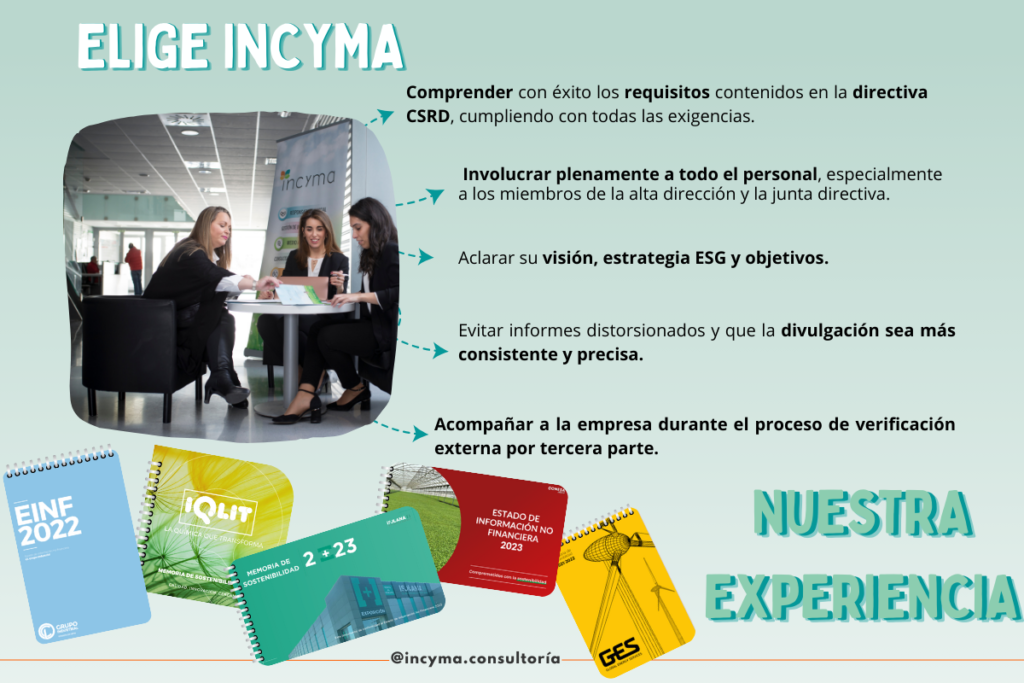
In INCYMA, We have over 15 years of experience helping companies comply with regulations in sustainability y ESG reporting. We help you comply with new regulations and ensure your company thrives in an increasingly demanding market.
SHALL WE TALK?
📞 687 591 435 · 670 036 546 / 📩 info@incyma.es
#INCYMA #ConsultingSystemsManagement #Sustainability #ESG #CSRD #NFRD #ReportingESG #ConsultingESG #EStrategyESG #EINF #Social Responsibility