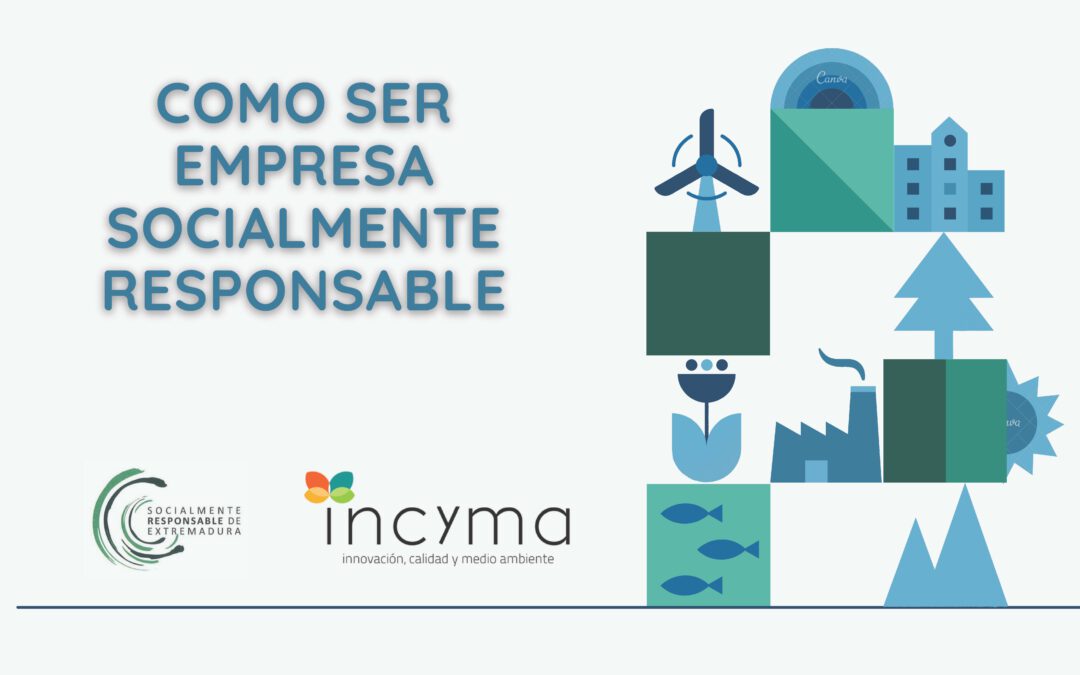
Many public tenders or financial aid programs include in their terms and conditions the evaluation of standards of quality, environment or even, of Social Responsibility in order to be eligible for them.
If we focus on the schemes of Social Responsibility, There is a wide range of certification schemes that companies can choose from, but this can create doubts or even confusion when implementing them.
Index
CHOICE OF A SOCIAL RESPONSIBILITY STANDARD
Depending on the sector and the requirements of your client or market, you can choose one standard or another. In summary, we can organize them as follows:
- Sectors in General: IQnet SR10, GRI, SA 8000, SGE21 Forética or our autonomous model ORSE Self-Assessment The schemes of the Junta de Extremadura, among others, are some of the schemes that can be framed for any organization.
- Food Sector: If your supplier or customer asks you to perform ethical audits, the standard SMETA It is the most suitable in this sector.
- Primary Production: If your activity is agricultural production, you can create the scheme GlobalGRASP. This protocol can be considered a voluntary module within the well-known standard. GlobalGAP.
STEPS TO IMPLEMENT A SOCIAL RESPONSIBILITY SCHEME
A simple path to obtaining a certificate of Social Responsibility could be:
- Step 1: Choosing the standard.
- Step 2: System Design and Implementation.
- Step 3: Choosing the certification body.
- Step 4: Internal Audit.
- Step 5: Certification audit.
- Step 6: Choosing the certificate.
OUR AUTONOMOUS MODEL OF SOCIAL RESPONSIBILITY: ORSE SELF-ASSESSMENT
Since 2010, there has been an active, dynamic and consultative tool in Extremadura whose objective is the implementation of responsible practices in social, environmental, economic and transparency matters.
It is a self-assessment in the matter of CSR, where the user has to comply with 5 different blocks in:
- Ethics and Values of the Company.
- Human Resources and Labor Relations.
- Environment.
- Company Social Relations.
- Responsible handling of information and communication.
Within these blocks, you will have to complete the different sections and indicators, which vary depending on the type of company you are (micro SME, SME or large company).
Our work in INCYMA It's about helping you meet all the indicators contained in the tool, as well as designing the best CSR strategy For your organization, manage verification of the self-assessment and registration as a socially responsible company in Extremadura.
If you need to carry out the verification, remember that we are a company approved by the Junta de Extremadura to be able to carry out the verification.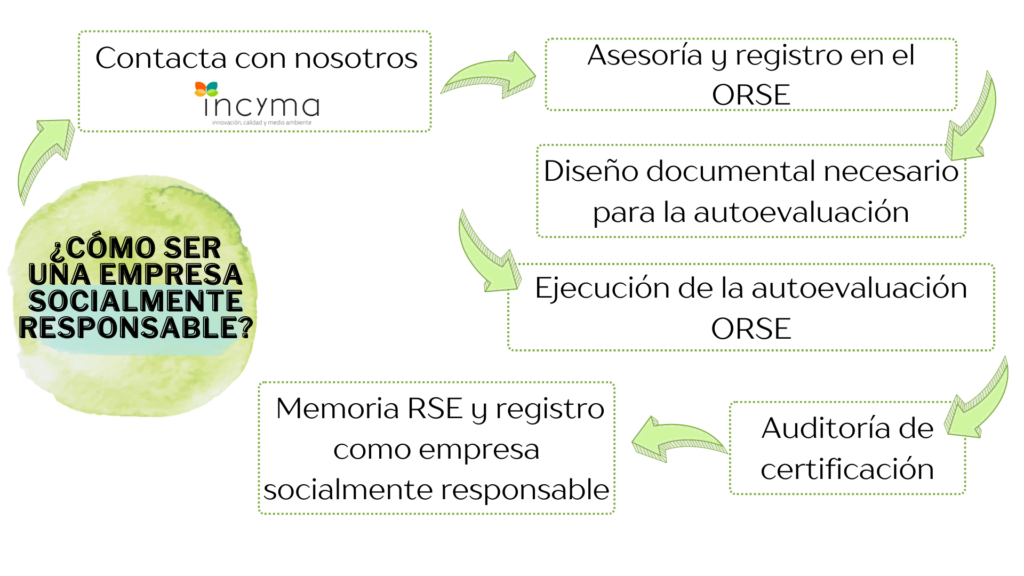
BENEFITS OF SOCIAL RESPONSIBILITY
- Easy integration with other management systems: ISO 9001, ISO 14001, ISO 45001, etc.
- Minimizing potential risks and identifying opportunities.
- Increased trust and credibility among third parties. The organization is perceived as more transparent and, therefore, more reliable.
- Access to public tenders: Bids, grants, etc. Priority in the awarding of contracts (preference in case of a tie).
- It facilitates and promotes the preparation of sustainability and social responsibility reports.
- Improvement of internal aspects related to quality, environment, economic and social matters.
- Tax benefits.
OTHER SOCIAL RESPONSIBILITY AND SUSTAINABILITY SERVICES
In addition to implementing schemes in the area of CSR, in INCYMA We also help you comply with Law 11/2018, by carrying out the non-financial information report necessary for verification. Our team includes qualified auditors to carry out this verification through various certification bodies.
Do you need a Social Responsibility System?
📞 618 486 932 / 687 591 435 – 📩 info@incyma.es
#INCYMA #ConsultingManagementSystems #ConsultingCSR #SocialResponsibility #Non-FinancialInformation #Law11/2018 #Self-evaluationORSE #CSR Reports #RSE #Sustainability #GRI #SR10 #SMETA #GlobalGRASP #SA8000 #Extremadura #Badajoz #JuntaDeExtremadura
Share this content on social media!
Source: INCYMA, ORSE Observatory.