Despite being an essential resource for life, the Freshwater is a limited resource and it is one of the resources that presents the most difficulties in guaranteeing its access and distribution in a sustainable way.
That is why one of the sustainable commitments your organization can make is the water footprint calculation, quantifying its use throughout the entire supply chain and establishing goals to use this resource more responsibly.
WHAT IS THE WATER FOOTPRINT?
The water footprint is a indicator Environmental assessment used that helps us to objectively understand the total consumption of fresh water (liters or cubic meters) to produce goods and services, as well as the identification of water pollution throughout this process.
There are different methodologies for calculating and reporting the water footprint, differentiating the methodology Water Footprint Network or the rule ISO 14046, The main difference is that the latter goes beyond the volumetric calculation of water consumption, evaluating the impact of its consumption through the Life Cycle Assessment (LCA).
WATER FOOTPRINT AND COMMITMENT TO SUSTAINABLE DEVELOPMENT
Climate change, the decreasing availability of freshwater, and the increasing demand for it make the urgency of establish strategies for reduce the environmental impact of our production processes.
That is why in 2015 the United Nations General Assembly established the Sustainable Development Goals (SDGs) as the future framework for global development. We imagine these goals will sound more familiar to you as the “Agenda 2030”😉
Among these SDGs There are several objectives related to environmental sustainability with the goal that the development of our industries is committed to the environment., being aware of the water footprint derived from their activity.
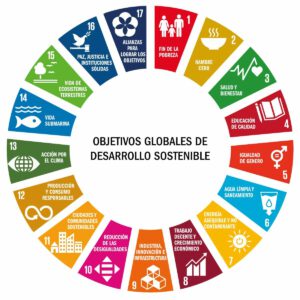
The study of the water footprint is so important that, in addition to being part of goal number 6, Clean Water and Sanitation, it is an indicator that can contribute to the achievement of other goals. Sustainable Development Goals:
🌱 Health and well-being; By consciously managing water consumption throughout the supply chain, we promote the availability of fresh water for the population.
🌱 Affordable and clean energy; through water reuse and sustainable waste management.
🌱Sustainable cities and communities; The application of water footprint assessment is not exclusive to industry, but is also adapted for monitoring water consumption in organizations and companies located within cities.
🌱 Responsible production and consumption; The water footprint indicator has as one of its goals to raise awareness about excessive water consumption, establishing objectives and best practices to curb its impact.
🌱 Climate action; In conclusion, the water footprint indicator is included within the actions to be established to reduce climate change.
Are you thinking about reducing your water consumption? Contact us!
📞679 738 294 / 624 681 189 – 📩 info@incyma.es
Share this content on social media!
Source: Esagua, United Nations. Image: United Nations.